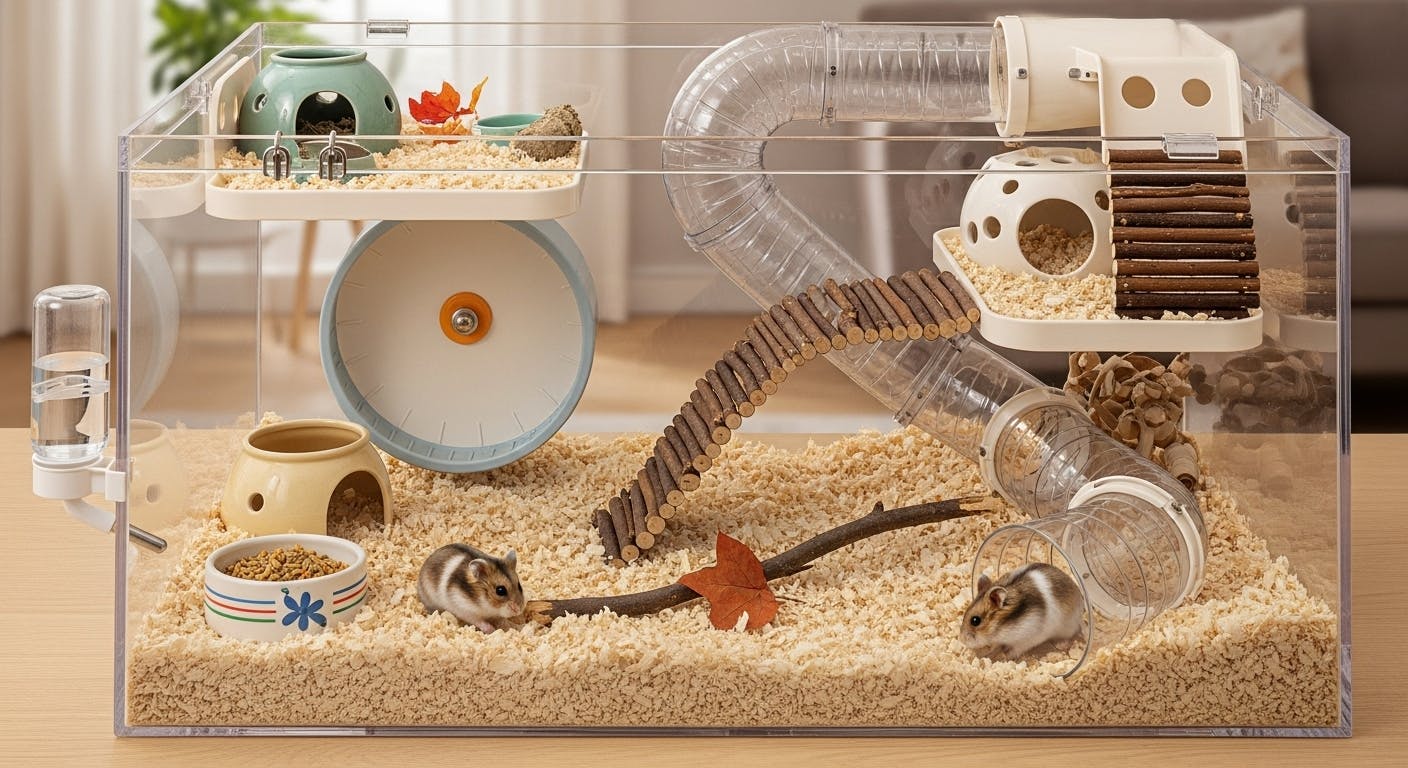
How big should a hamster cage be? A hamster cage should have a minimum of 450 to 600 square inches of floor space, though many owners recommend 800+ square inches for Syrian hamsters. The enclosure must be deep enough to hold 6–10 inches of substrate for burrowing and wide enough to accommodate a large, solid-surface exercise wheel (8–12 inches depending on the species).
To choose the right hamster cage, we must first look at their behavior in the wild. Hamsters are not climbing animals; they are ground-dwelling foragers and burrowers. In the wild, they create complex underground tunnel systems that can reach several feet deep. When we put them in small, plastic cages with limited bedding, we are effectively preventing them from performing their most basic natural behaviors. This leads to "stereotypical behaviors" like bar-biting, climbing the ceiling (monkey-barring), and pacing.
Most cages sold in mainstream pet stores are unfortunately too small. While they look cute and colorful, they often provide less than 200 square inches of space.
A 40-gallon breeder tank or a 75-gallon aquarium makes a fantastic home. The solid glass walls allow for incredibly deep bedding, and you can watch your hamster build tunnels against the glass. The only drawback is weight; these are heavy and require a sturdy stand.
If you are on a budget, a "Bin Cage" is your best friend. Purchase the largest plastic storage tote available (like the IKEA Samla or a 200-quart bin). Cut out a large portion of the lid and sides and zip-tie hardware cloth (metal mesh) over the openings for ventilation. It provides massive space for under $40.

When a medical emergency hits, the last thing you want to worry about is a "payout cap." Discover why Healthy Paws remains a leader in unlimited pet insurance coverage.

Big dogs carry big weight. We explore why a high-quality dog bed is an investment in your pet’s long-term mobility and comfort.

A dog crate isn't just a cage; it's a bedroom, a sanctuary, and a vital training tool. Learn how to choose the right one for your furry friend's needs.
Many enthusiasts use the IKEA LINNMON or IKEA PAX systems to DIY a massive wooden enclosure. These offer the "gold standard" of space, often exceeding 1,000 square inches, making them perfect for owners who want a beautiful, furniture-like piece in their home.
The floor of the cage is just the beginning. The base depth of the cage must be deep enough to hold at least 6 to 10 inches of bedding. Without this, your hamster cannot burrow, which is their primary way of regulating their temperature and feeling safe.
A cage is only as good as what's inside it.